Battle Night Funkin: Music Mod
- 3.9
- Rating
- 100.00K
- Installs
- Free
- Price
 Analysis by App-foxy
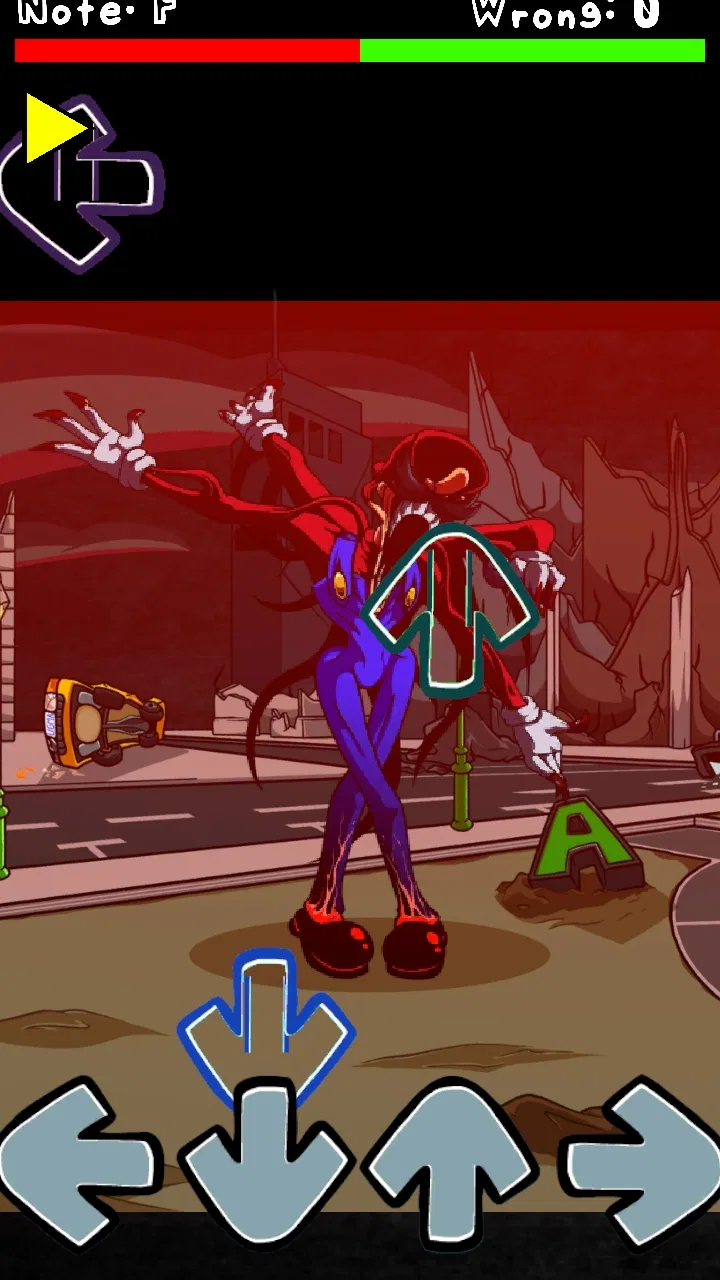
Battle Night Funkin: Music Mod is a free music game from Sky_Games that turns each short play session into a test of timing, attention, and recovery. I approached it as the kind of game you open when you want immediate interaction rather than a long story or a complicated setup. Its store summary points to Friday with some mods, while the short description frames it as a night-time Funkin battle, so the identity is clear: this is built around rhythm-driven competition with a Friday Night Funkin-inspired feel.
After spending time with it, my main impression is that the appeal comes from the simple loop. You begin a musical challenge, react to prompts as the track moves, receive immediate feedback on your performance, and then decide whether the result is good enough to stop or worth trying again. The strongest reason to return is not a large collection of extras; it is the desire to clean up a missed sequence and feel the song flow properly. That makes the game easy to understand, although players looking for a deeper music-game system may eventually notice its limits.
How the first action sets the tone
The opening appeal is its low barrier to entry. You do not need to learn a large set of rules before playing. The central task is to follow the musical cues and respond at the right moment, which lets the game communicate through action instead of lengthy explanation. For a player familiar with rhythm games, that immediate start is welcome. For someone new to the genre, the basic idea is also approachable because the connection between the beat and the required input is easy to grasp.
You May Also Like

 AccuWeather: Weather Radar
AccuWeather Review: A Quick, Clear Forecast for Everyday Decisions
For everyday plans, the best forecast is the one you can understand quickly. AccuWeather makes rain timing, radar, and local conditions easy to act on, with a few trade-offs.

 Hill Climb Racing
Why Hill Climb Racing Still Turns Crashes Into One More Run
A tiny car, a bumpy hill and one more upgrade: Hill Climb Racing keeps resurfacing because its simple chaos makes every near-miss feel personal.

 AliExpress - Shopping App
AliExpress Makes Global Shopping Feel Personal, but Shoppers Bear the Risk
AliExpress turns a global marketplace into a pocket-sized discovery engine. Its reach is useful, its shopping loop compelling, and its trade-offs easy to miss.

 Lords Mobile: Kingdom Wars
Lords Mobile Is a Kingdom-Building Routine, Not a Quick Match
A case-by-case verdict on the building, battles, device demands, and social commitments that make Lords Mobile rewarding for some players and exhausting for others.

 PDF Scanner app - TapScanner
TapScanner Makes Paperwork Easier to Capture, Check, and Share
TapScanner makes scanning with a phone feel less like a rescue operation and more like a dependable step in getting work done. Its capture tools are useful, though not flawless.

 Block Blast!
 Shows How Much a Puzzle Game Can Leave Out
A quiet grid game shows why puzzle players increasingly value instant clarity, repeatable skill and low-pressure play—and where the genre still needs to catch up.
More From Our News Desk
View All News


I like this kind of design for short breaks. If I have only a few minutes, I can begin a round without first arranging a team, managing equipment, or remembering a complicated progression tree. The music supplies the structure, and the input challenge gives the session a clear purpose. That simplicity is also why the game feels more like a focused reflex exercise than a conventional adventure game with music added on top.
The “mods” angle gives the presentation a slightly different personality from playing a completely standard rhythm title. It suggests a familiar format being reshaped rather than presented as a plain copy of a basic song challenge. I would not approach it expecting a full rhythm-game platform with endless customization, but the modified framing helps it feel like a compact experiment for fans who enjoy the Friday-style battle format.
One useful way to start is to treat the first attempt as a calibration run rather than a serious score chase. Pay attention to how quickly prompts arrive, whether your device responds comfortably to your taps, and which patterns cause hesitation. This matters because early mistakes are not always a sign that the song is too difficult. Sometimes the real issue is that the player is watching the wrong part of the screen or reacting to the visual cue instead of anticipating the beat.
That distinction becomes important on a small phone. Your hands can cover part of the play area, and a busy visual presentation can make a sequence feel faster than it is. I found that a little patience during the opening attempt is more useful than immediately blaming the controls. Once the timing relationship makes sense, the game becomes much more readable.
Why the first miss is useful
A missed input gives you information even when it hurts the current run. It shows whether your problem is speed, attention, or consistency. If you miss only when several prompts arrive close together, you may need to watch the sequence as a pattern instead of treating every cue as an isolated event. If you miss after losing concentration during a quieter passage, the challenge is maintaining focus rather than reacting quickly.
This is one of the better qualities of a compact music game: failure can be specific. A defeat does not necessarily feel like a vague wall. It can reveal a moment to practice. I recommend remembering the first place where your rhythm breaks, then using the next attempt to prepare for that section instead of playing the entire round with equal mental effort.
Feedback that turns sound into pressure
Rhythm games live or die by feedback. The player needs to understand whether an input was early, late, or successful, and that information must arrive quickly enough to influence the next action. Battle Night Funkin: Music Mod works best when I focus on the combined signal of the music, the moving prompts, and the immediate result of each input. The game is not asking me to think through a menu or calculate a strategy; it is asking me to stay inside a timing stream.
The satisfying moments are the stretches where the response becomes automatic. I stop translating every prompt into a conscious decision and begin moving with the track. That is the point at which the game’s feedback rhythm feels rewarding. A successful sequence gives me confidence, but it also raises the pressure because one careless response can interrupt the run I have built.
That pressure is useful, though it can also expose the game’s main weakness for less experienced players. A rhythm challenge can feel harsh if the visual and audio signals do not line up comfortably on a particular device. Small differences in touch response, screen size, or audio setup can change how fair the game feels. I would test it in the environment where I actually plan to play, rather than assuming that a good first impression on one device will feel identical everywhere.
Playing with sound is especially important. The visual prompts are necessary, but the music provides the timing context that makes the patterns easier to predict. Without audio, I would be relying almost entirely on visual reaction, which removes much of the genre’s appeal and can make the same sequence feel more mechanical. Headphones may help when the surroundings are noisy, but the practical goal is simply to hear the beat clearly enough to anticipate rather than panic.
I also advise keeping the volume comfortable instead of turning it up to force concentration. Loudness does not fix timing, and fatigue can make a short game feel more frustrating than it needs to be. A calm setup, a stable grip, and a screen position that keeps the prompts visible are small adjustments, but they make the feedback loop easier to read.
Reading patterns instead of chasing every note
My most useful playing adjustment was to stop treating each prompt as a completely new problem. When a sequence repeats a direction or creates a recognizable run, I can prepare my hand for the shape of the pattern. This reduces the mental load and makes the action feel connected to the music. It is a transferable rhythm-game skill, but it is particularly valuable here because the game’s core enjoyment comes from improving the same kind of performance through repetition.
Another practical tip is to avoid staring only at the next prompt. Looking slightly ahead helps me recognize what is coming, while looking too far ahead can cause me to lose the current beat. The right balance is a small visual window: respond to the present cue while allowing the next one to enter awareness. That approach turns frantic tapping into controlled anticipation.
If a run begins badly, I do not always restart immediately. Continuing for a little longer can reveal whether the opening mistake actually matters or whether the later pattern is the real obstacle. Restarting too quickly can become its own bad habit, especially when the player is chasing a perfect beginning instead of learning the full shape of the challenge.
What counts as a reward
The reward structure here is primarily performance-based. The immediate payoff is the feeling of completing a sequence cleanly, surviving a difficult passage, or improving on a previous attempt. That may sound modest beside games with characters to collect or large worlds to unlock, but it is exactly what keeps many rhythm games engaging. The reward is located in the player’s growing control.
I enjoy that the game can create a small personal target without requiring a long commitment. One session might be about reaching the end. The next might be about reducing mistakes in the middle. Later, I may return simply because I remember one section that felt messy and want to play it correctly. This is a useful form of progression for people who prefer mastery to inventory management.
The game is a good fit for fans who already understand why repeating a song can be enjoyable. It is less suitable for someone who needs a strong narrative reason to continue or expects every attempt to unlock a substantial new system. The satisfaction depends on caring about timing quality. If missing a note does not bother you and repeating a challenge feels pointless, the central reward may not be enough to hold your attention.
Its free price makes experimenting easy. I can try it without treating the download as a major purchase decision, which suits a game designed around quick musical challenges. At the same time, “free” does not guarantee that it will match every player’s taste. The real question is whether the Friday-style battle format and repeated timing practice sound appealing to you. If you want a broad music library, deep customization, or a more polished long-term progression path, a larger established rhythm title may be a better destination.
The audience label is Teen, so I would also consider that when deciding who should play it. Parents choosing games for younger children should check whether the tone and presentation suit their household rather than assuming that a music-focused label automatically means it is intended for everyone. For older players, the age category is unlikely to be a practical obstacle, but it is still useful context when recommending the game to someone else.
A realistic everyday session
Imagine having a short wait before an appointment. You open the game, play one round, and notice that your timing falls apart whenever the prompts become denser. Instead of treating the attempt as wasted, you identify that section as the target for the next run. On the second try, you watch slightly ahead, listen for the beat, and keep your hand relaxed. You may still miss an input, but the run feels more controlled. That is the kind of everyday use where this game makes sense: a contained challenge with a clear beginning and end.
It also works after a longer day when I want something active but not mentally expansive. A story-heavy game asks me to remember characters and objectives. This asks me to pay attention for a few minutes. The trade-off is that it can become repetitive if I play beyond the point where I am learning anything new. I get more from it when I stop after a satisfying improvement and return later with fresh concentration.
Why the reset keeps another session alive
The reset is central to the experience. After a mistake, a failed run, or an attempt that simply feels untidy, the game invites a decision: move on or try again. Because the core action is compact, restarting does not feel like abandoning a large investment of time. That makes failure easier to accept and encourages experimentation with different attention strategies.
There is a fine line between a motivating reset and a frustrating one. A retry feels worthwhile when I understand what I am trying to improve. It feels empty when I restart automatically without changing anything. My advice is to give each new attempt a single purpose: hold the beat through a difficult passage, look farther ahead, or keep your inputs relaxed. A focused retry produces more progress than simply tapping harder.
This reset loop also explains why the game can appeal to two different kinds of players. Casual players can complete a quick attempt and leave, while competitive-minded players can repeat the same material until their execution improves. The game does not need to force one pace on both groups. The casual player receives a short distraction; the dedicated player creates a private training routine from the same challenges.
Still, repetition can become a limitation. If you are expecting constant surprises, a broad campaign, or a large set of unrelated activities, the reset may eventually feel like circling the same track. That is not a flaw in the basic concept, but it does define the game’s boundaries. I would choose it for focused rhythm practice, not as my only mobile game.
The current version is 59.01, and the game supports devices running Android 7.1 or newer. That makes it relevant to people using older Android hardware, although compatibility on paper is not the same as identical comfort in play. Rhythm timing is sensitive to the device experience, so I would pay attention to responsiveness and audio alignment during the first few rounds. If the controls feel inconsistent, the game’s core loop will suffer regardless of how appealing the concept is.
Where it stands among music games
Compared with a conventional music player, this is obviously more demanding and more interactive. It does not exist to provide background listening; it turns the track into a challenge that requires concentration. Compared with a large rhythm-game app, it feels more focused and less like a complete platform. That difference is useful when choosing between them.
I would pick Battle Night Funkin: Music Mod when I want a Friday-style battle atmosphere and a direct timing task without committing to a sprawling system. I would choose a broader alternative when I want many musical genres, extensive song management, deeper customization, or a progression structure that gives me reasons to play beyond improving execution. Neither choice is automatically better; they serve different moods.
The game also has a different relationship with failure than slower puzzle or casual games. In those titles, I can often pause and think. Here, hesitation is part of the challenge, and the best response usually comes from preparation rather than deliberation. That makes it energizing for players who enjoy reflexes, but it may be tiring for anyone looking for a relaxed game that can be played while multitasking.
Its audience size suggests that it has reached a meaningful group of players, with over one hundred thousand installs and an average rating of four stars. Those figures make it worth considering, but they do not replace personal testing. Music-game enjoyment is unusually dependent on taste, timing comfort, and whether the specific presentation clicks with you. I would treat the rating as a useful signal, not a guarantee that every player will share the same reaction.
The developer, Sky_Games, has positioned the title as a free music game rather than a premium release. That matters for discovery: the cost barrier is low, but the value comes from how long the timing loop remains enjoyable. If you are comparing it with paid rhythm games, judge it by the quality of the short sessions it gives you, not by whether it contains the same amount of content as a larger commercial package.
My verdict on the complete loop
Battle Night Funkin: Music Mod succeeds when its action, feedback, reward, and reset stay tightly connected. I start a musical battle, read the prompts, listen for the rhythm, and react. The game tells me quickly whether I am holding the sequence together. A clean passage feels like a small victory, a mistake identifies something to fix, and the short format makes another attempt feel reasonable instead of burdensome.
My honest reservation is that the same focused design can feel narrow. Players who need a substantial story, a wide music catalog, or a complex progression system should look elsewhere. It is also not ideal for distracted play, because the game asks for attention at the exact moment the prompts arrive. A noisy environment, an uncomfortable device setup, or a dislike of repetition can weaken the experience quickly.
For the right player, though, the simplicity is the point. I would recommend it to someone who enjoys Friday-style rhythm battles, wants a free game for short sessions, and likes improving through repeated attempts. I would suggest starting with sound enabled, treating the first run as practice, and changing one habit at a time when retrying. That approach reveals the game’s real strength: not a huge amount of content, but a clear little loop that makes one more attempt feel justified.
Released on November 9, 2025, it is best understood as a compact music challenge rather than an all-purpose mobile game. If you want immediate action and the satisfaction of finally keeping a difficult sequence together, it is an easy title to try. If you are searching for a richer alternative with broader systems, make this a brief experiment rather than your main rhythm-game home.
FAQs for Battle Night Funkin: Music Mod
01What is Battle Night Funkin: Music Mod?
Battle Night Funkin: Music Mod is a rhythm-based music game where players compete in musical battles against various characters. The game is known for its engaging mechanics and catchy tunes, challenging players to hit notes in time with the music to score points and progress through levels.
02Is Battle Night Funkin: Music Mod free to play?
Yes, Battle Night Funkin: Music Mod is free to download and play. However, it may contain in-app purchases that offer additional content or features. These purchases are optional and not required to enjoy the core gameplay experience, making it accessible to a wide audience.
03What platforms is Battle Night Funkin: Music Mod available on?
Battle Night Funkin: Music Mod is available on both Android and iOS platforms. This ensures that players with a variety of devices can enjoy the game. Simply visit the Google Play Store or Apple App Store to download the game to your smartphone or tablet.
04What kind of music can I expect in Battle Night Funkin: Music Mod?
The game features a diverse range of music genres, including pop, rock, and electronic. Each level introduces new tracks that are integral to the gameplay. The catchy and rhythmic tunes are designed to enhance the gaming experience, keeping players engaged and entertained.
05Are there any age restrictions for downloading Battle Night Funkin: Music Mod?
Battle Night Funkin: Music Mod is generally suitable for all ages, though it’s recommended for players aged 12 and up due to some of the themes and competitive nature of the game. Parents are advised to review the content and ensure it aligns with their preferences for their children.
Pros
- Engaging rhythm-based gameplay.
- Vibrant and colorful graphics.
- Frequent updates with new songs.
- User-friendly controls and interface.
- Offline play mode available.
Cons
- Limited character customization.
- Occasional in-app ad interruptions.
- Some songs locked behind paywall.
- High battery consumption during play.
- Requires internet for leaderboard access.

Battle Night Funkin: Music Mod
Gallery